The Game
Copy linkPlayers will battle it out in this great civil war, attempting to destroy each other’s LifeForces with their powerful Warriors and any resources they may have at their disposal. With one eye on the board, and the other on the Economy, Keeper’s Dissension will demand all of your greatest strategies to defeat your enemy and emerge the victor!
The game is over when you reduce the Health Points of your opponent’s LifeForce to 0. In the event of a tie, the first player to kill the enemy Keeper wins.
Game Overview
Copy linkKeepers Dissension is a tactical battlefield game of positioning, resource pressure, hidden threats, and exact timing.
Objective
Destroy the enemy LifeForce while keeping your own LifeForce alive.
Your army
You control a Keeper, several Minions, and a Guardian.
Your turn
On your turn, spend up to 3 actions to move, attack, use abilities, take or spend Strange Matter, purchase items, or hand off Loot.
Responses
If your Warriors survive an Attack, they receive a free action during your opponent's turn!
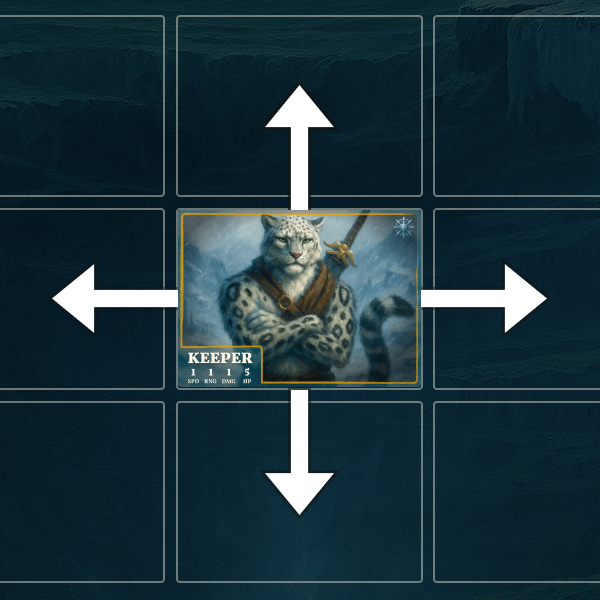 Move a WarriorUse Speed to claim space.
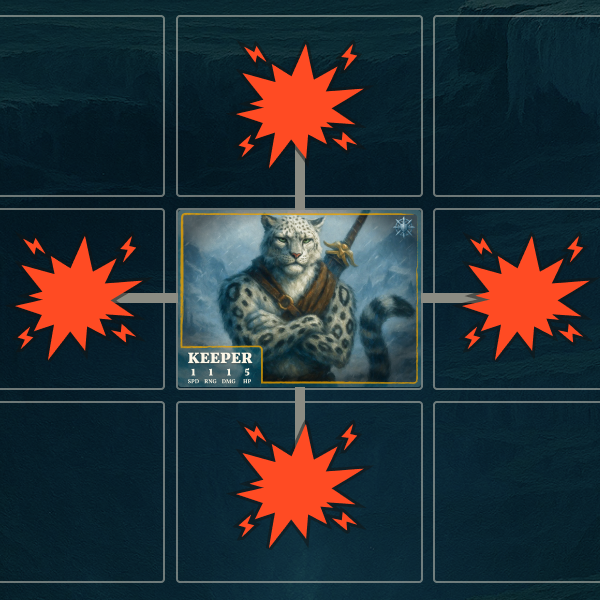 AttackPressure Warriors, Walls, or the LifeForce.
 Use an AbilityPlay the special rule that changes the moment.
 Acquire Strange MatterBuild your economy.
 Spend Strange MatterBuy cards, Walls, Minions, or unchain your Guardian.
The battlefield is a 7x7 Board. Walls, Bombs, Markers, Portals, Void, Loot, Strange Matter, and Ability Cards can change what spaces are legal, what can be attacked, and whether Responses happen.
Most important timing rule: when multiple events happen at the same time, resolve Damage, then Deliver, then Responses.
Warriors
Copy linkWarriors are the playable pieces you command: your Keeper, your Minions, and your Guardian.
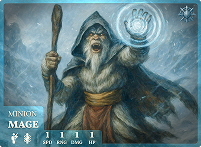
SpeedMovement
How many spaces a Warrior can move with one movement action.
RangeReach
How far a Warrior can attack across the board.
StrengthDamage
How much Health the Warrior removes when it attacks.
HealthSurvival
How much damage the Warrior can take before being destroyed.
What counts as a Warrior?
Your Keeper, Minions, and Guardian are Warriors. Warriors can move, attack, use abilities, receive damage, carry Loot, and be destroyed.
Shared Warrior Rules
- Warriors normally move forward, backward, or sideways.
- Warriors do not move diagonally unless an ability allows it.
- Warriors normally move into unoccupied spaces only.
- An allied Warrior can switch places with another adjacent allied Warrior for 2 actions.
- If an effect pushes or moves a Warrior into a space it cannot legally occupy, that Warrior receives 1 Damage.
Keeper
Your Keeper represents you on the battlefield and is tied directly to your LifeForce.
Speed1
Base movement per movement action.
Range1
Base attack reach.
Strength1
Base attack damage.
Health5
Damage the Keeper can take before being destroyed.
When Your Keeper Is Destroyed
- Drop 5 Strange Matter on the Keeper’s space.
- Also drop all Strange Matter the player had stored.
- The player’s LifeForce loses 5 Health.
- If the LifeForce survives, the Keeper respawns using Keeper respawn priority.
Keeper Respawn Priority
Respawn begins with legal unoccupied spaces adjacent to the LifeForce on the LifeForce row. If those are unavailable, placement checks the next nearest legal spaces around the LifeForce according to the respawn rules.
If the Keeper cannot legally respawn, its LifeForce is reduced to 0 and that player loses.
Keeper Ultimate Ability
Each player chooses one Keeper Ultimate Ability during setup. It costs 1 action to use and may be used once per game.
Resurrect
Return one dead Minion from the Graveyard to a legal space adjacent to its LifeForce. It becomes available on your next turn.
Regrowth
Heal your Keeper by 2 Health.
Freeze
Enemy Warriors cannot take movement actions until the beginning of your next turn.
Command
Take control of an enemy Warrior within 1 space of your Keeper until the end of the current turn.
Keeper Responses
When a Keeper receives a Response, it is a player-level Response. That means the Response may be used for any one legal player action, including moving, attacking, using an ability, buying, collecting Strange Matter, or using an allied Warrior.
The Keeper receives Responses from the same valid triggers as other Warriors: surviving an enemy Attack, falling because an enemy destroyed the Wall beneath it, or being revealed from Stealth because an enemy tried to occupy its space.
What Does Not Grant a Keeper Response
Damage and other non-Attack effects do not grant Keeper Responses. Bombs, Void, Wall effects, collision damage, forced-movement damage, direct Health loss, Destroy effects, Shockwave, Minefield, Explode, and Penalty do not grant Responses by themselves.
Minions
Minions are your main battlefield pieces. Each type has its own role and ability pair.
Mage
Controls positioning with Stun and protects allies with Deliver.
Scaler
Uses Scale and Leapfrog to cross Walls and obstacles.
Bomber
Creates hidden danger with Minefield and punishes nearby pieces with Explode.
Sniper
Threatens from farther away with Range and hides with Stealth.
Ogre
Hits harder with Strength and can attack nearby spaces with Ground Pound.
Blockader
Holds ground with Armor and pushes enemies with Ram.
Scout
Reveals hidden threats with Vision and moves diagonally with Strafe.
Base Minion reminder: unless a card or ability changes it, a Minion has 1 Speed, 1 Range, 1 Strength, and 1 Health. When destroyed, a Minion drops 2 Strange Matter and goes to the Graveyard.
Guardian
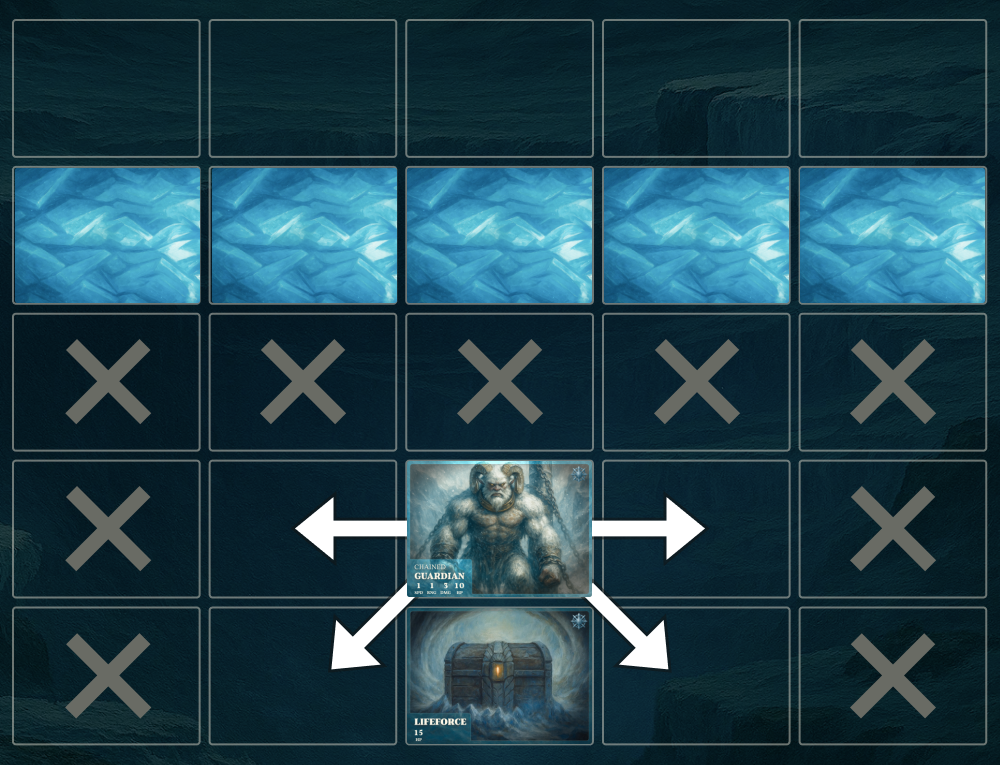
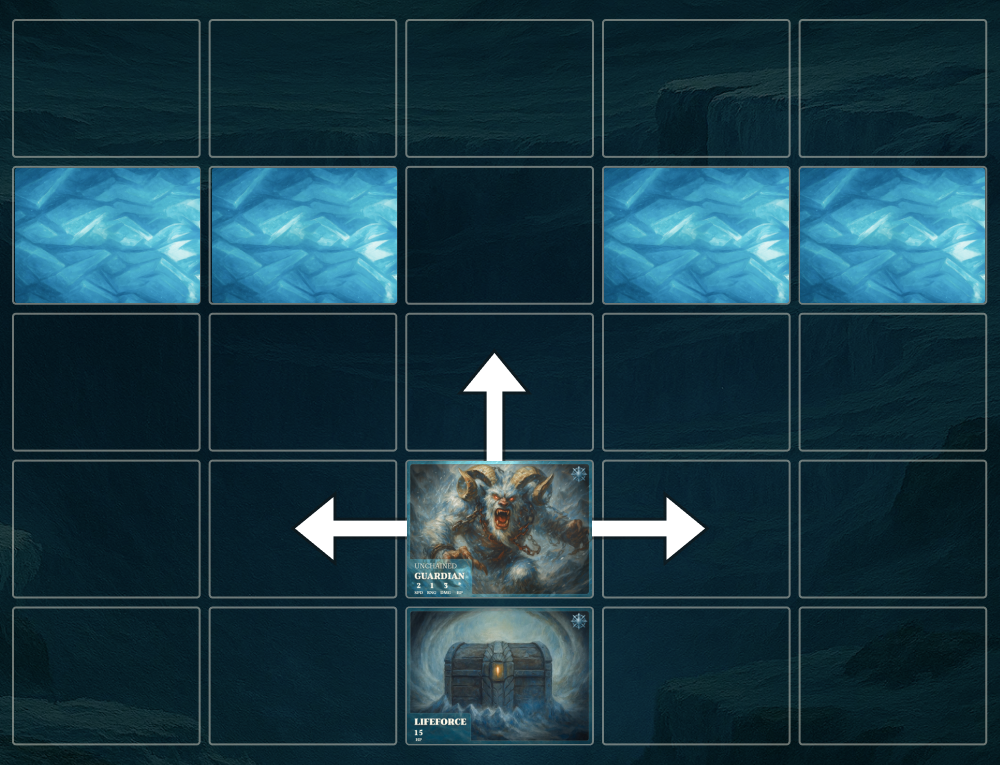
The Guardian protects the LifeForce. While Chained, it stays near the LifeForce. Once Unchained, it becomes faster and may move freely using normal movement rules.
Actions
Copy linkEach player may take up to 3 actions on their turn.
Simple turn rhythm: choose any 3 actions, repeat actions if helpful, then end your turn. You are never required to spend all 3 actions.
Move a Warrior through legal spaces according to Speed and movement rules.
Make a normal Warrior Attack or use an Ability that explicitly says Attack.
Use Minion Abilities, Keeper Ultimate Abilities, Active Keeper Ability Cards, or available CC cards when legal.
Take Strange Matter from the Economy, purchase items, or hand off Loot.
Movement
When moving, all Warriors, including Minions, Keepers, and Guardians, may normally move 1 space forward, backward, or sideways for each action spent. Speed determines how many spaces a Warrior may move per action.
Handing Off Loot
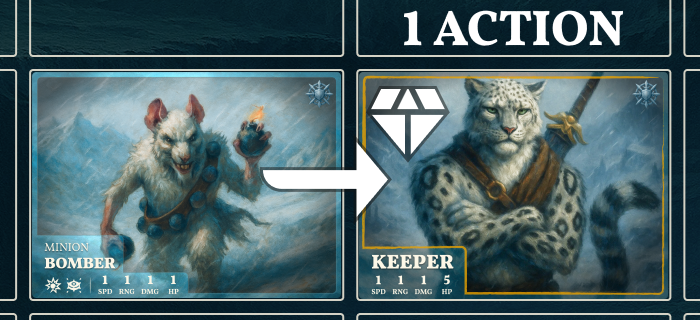
A Warrior carrying Loot may spend 1 action to hand off that Loot in a direction that it can move. The receiving Warrior must be friendly and must also be able to move in the same direction. The Loot changes carriers, but neither Warrior changes spaces.
Forced Movement and Damage
If an outside force attempts to move a Warrior into a space it cannot legally occupy, that Warrior receives 1 Damage. Damage is not an Attack and does not grant a Response.
Walls and Scale
The Scale Ability allows a Warrior to move onto or off of a Wall. Moving onto a Wall does not require extra Speed. Warriors without Scale cannot move onto Walls. A Warrior standing on a Wall and the Wall itself are both treated as occupying that location for movement, targeting, and board-state rules.
Movement
Copy linkMovement depends on Speed, legal spaces, occupied spaces, and whether an Ability changes the normal movement rules.
Movement Overview
All Warriors may normally move 1 space forward, backward, or sideways per action. A Warrior’s Speed determines how many spaces it may move per action. Warriors may not move diagonally unless an Ability or effect allows it.
Occupied Spaces
Warriors normally move only into unoccupied spaces and do not pass through occupied spaces. Some occupied spaces are special because they are traversable, such as Portals and Void, and are handled by their own rules.
Legal Movement
Warriors move only through or onto spaces they are legally allowed to occupy. Hidden Markers are treated as unoccupied until revealed, so a Warrior may attempt to move onto them, but the reveal can make the movement fail.
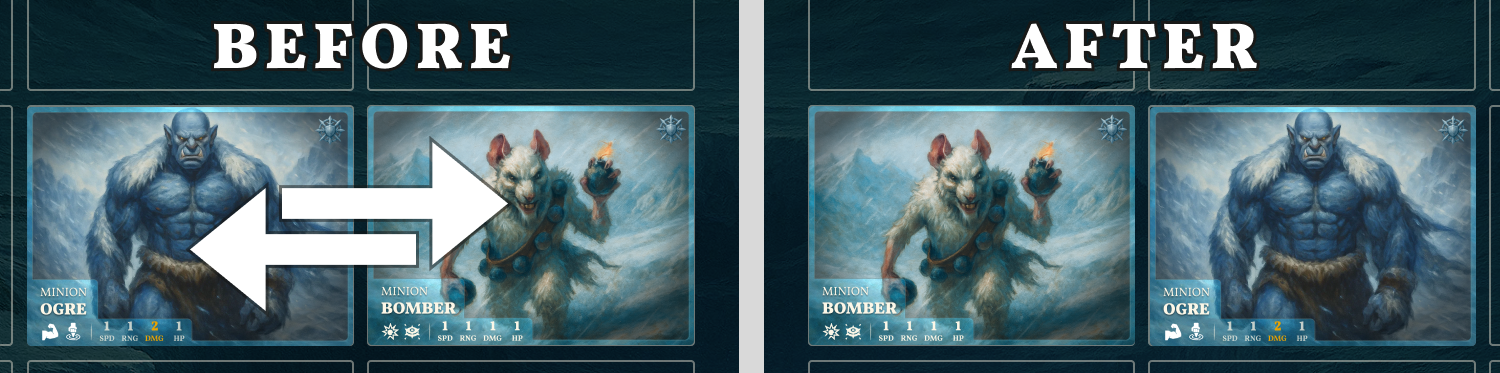
Switching Places
A Warrior may switch places with an adjacent allied Warrior for 2 actions. The switch must be made in a direction the Warrior is allowed to move.
Walls and Scale
The Scale Ability allows a Warrior to move onto or off of a Wall. Moving onto a Wall does not require extra Speed. Warriors without Scale cannot move onto Walls. A Warrior with Scale may stand on top of a Wall, and both the Wall and the Warrior are treated as occupying that location.
Failed or Restricted Movement
If a Warrior is attempted to be moved but cannot legally move because of a restriction, blocking effect, or lack of legal space, that Warrior remains in place. It still receives any Damage specified by the effect that attempted to move it. Movement restrictions prevent voluntary movement, but they do not prevent forced movement unless the effect explicitly says so.
Attacks and Responses
Copy linkAttacks and Responses are exact rules. Damage alone does not create a Response.
Normal Warrior Attacks
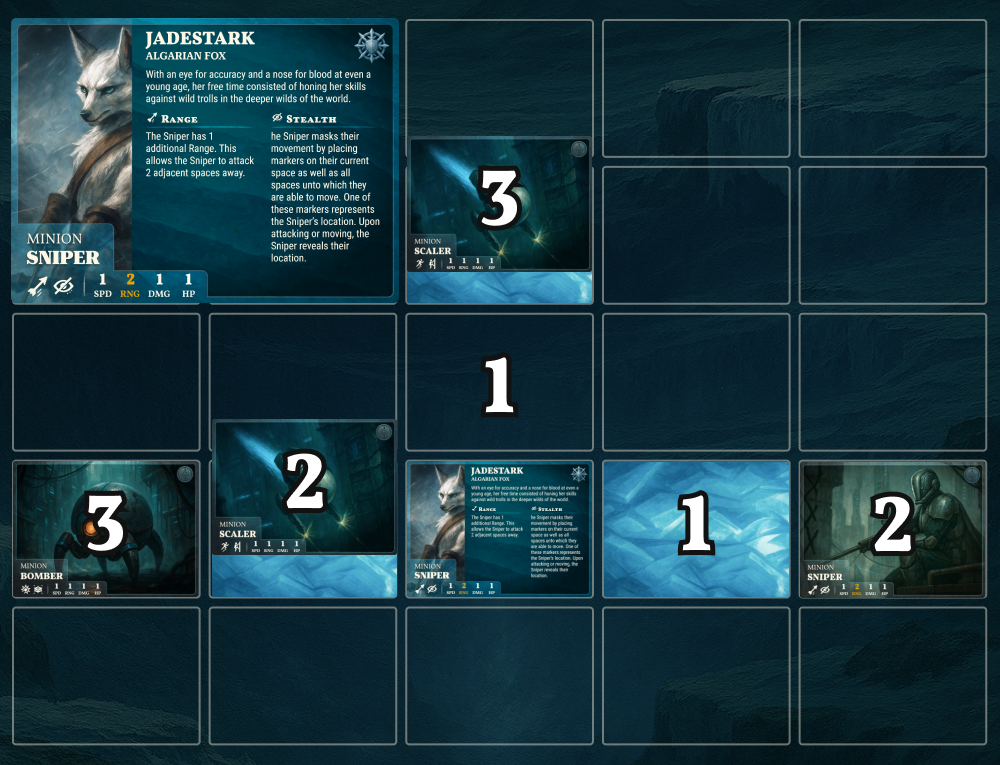
Players may attack a Warrior, LifeForce, or Wall with either a normal Warrior Attack or an Ability Attack. Normal Warrior Attacks use the Warrior’s current Damage and are either Melee or Ranged. A Melee Attack targets an adjacent legal target. A Ranged Attack targets a Warrior or LifeForce beyond melee range. Walls cannot be attacked with Ranged Attacks.
Attacking From, Onto, or Across Walls
A Warrior standing on a Wall may attack normally. Attacking a Warrior on a Wall from the ground requires +1 Range. Attacking across a Wall also requires +1 Range. If a Warrior is standing on the intervening Wall, count both the Wall and that Warrior for Range.
- Same-level adjacent targets require 1 Range.
- A target on a Wall, or a target behind one empty Wall, requires 2 Range.
- A target behind a Wall with a Warrior standing on it requires 3 Range.
Ability Attacks
An Ability is an Attack only if it says Attack or tells the player to make an Attack. Effects that only deal damage, cause Health loss, destroy, push, move, reveal, or otherwise affect a target are not Attacks by themselves. Ground Pound is an Attack. Shockwave is not.
Response Triggers
A Warrior receives a Response only during the opposing player’s turn and only if it survives one of these Response triggers:
| Trigger | Response? | Why |
|---|---|---|
| Survives an enemy Warrior Attack or enemy Ability Attack | Yes | It survived an enemy Attack. |
| Falls because an enemy Warrior destroyed the Wall underneath it | Yes | This is a specific Wall-Fall Response trigger, not an Attack. |
| Is revealed from Stealth because an enemy Warrior attempted to occupy its hidden space | Yes | This is a specific Stealth-Reveal Response trigger, not an Attack. |
What Does Not Grant a Response
Self-inflicted attacks, allied attacks, Damage, Void, Wall effects, collision damage, forced movement damage, direct Health loss, Destroy effects, Shockwave, Explode, Penalty, inflicted Damage, and other non-Attack effects do not grant Responses.
Important: A Response is still granted if an enemy Attack deals no damage, is prevented, reduced to 0, blocked, or replaced. If Deliver triggers from an enemy Attack, Deliver acts as that Warrior’s Response and no extra Response is granted.
Keeper Responses
A non-Keeper Warrior may use a Response only to move, attack, or use one of its own abilities. A Keeper Response is a player-level Response and may be used for any one legal player action.
Destruction and Endgame
When a Warrior, LifeForce, or Wall reaches 0 Health, it is destroyed. The attacker does not move into the destroyed space unless a rule moves or places it there. A destroyed Minion drops 2 Strange Matter and goes to the Graveyard. A destroyed Guardian drops 10 Strange Matter. A destroyed Keeper drops 5 Strange Matter plus stored Strange Matter, its LifeForce loses 5 Health, and the Keeper respawns if the LifeForce survives.
Event Priority
Copy linkWhen multiple events happen at the same time, resolve them in a fixed order so the game state stays clear.
Calculate and apply all simultaneous Damage first.
After Damage is resolved, handle Delivered Warriors.
After Deliver, resolve any Responses created by valid Response triggers.
If multiple owned Responses are created, their owner chooses the order.
Damage
Damage is resolved first. Calculate the total Damage that would be dealt to each affected Warrior, LifeForce, Wall, Marker, Bomb, or other damageable object. If a single effect damages multiple targets at the same time, all of that Damage is applied as one simultaneous Damage event.
Deliver
After all Damage is resolved, handle Delivered Warriors. Deliver does not create a Response by itself. If Deliver is triggered by an enemy Attack, Deliver acts as that Warrior’s Response and no extra Response is granted.
Responses
After Deliver, resolve any Responses created by valid Response triggers. Responses happen only during the opposing player’s turn and only from the three Response triggers.
Strange Matter
Copy linkStrange Matter is the main resource used to buy cards, Walls, Minions, and Guardian unchaining.
You can gain Strange Matter by spending actions to collect it from the Economy, by picking up Loot dropped on the battlefield, or through certain abilities and card effects.
Spending Strange Matter
Spent Strange Matter returns to the Economy. A Wall costs 5 Strange Matter. A Keeper Ability Card costs 5. A Minion costs 10. Unchaining a Guardian costs 20.
Strange Matter as Loot
When a Warrior is destroyed, it drops Strange Matter on the battlefield. A Minion drops 2. A Keeper drops 5 plus all of that player’s stored Strange Matter. A Guardian drops 10.
Loot
Copy linkLoot is the Strange Matter left behind when a Warrior dies.
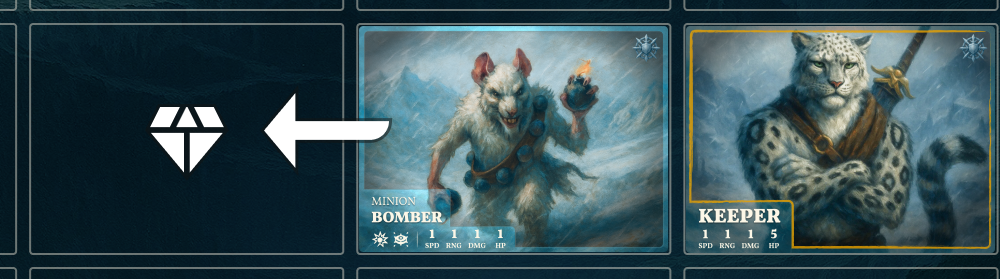
When a Keeper moves over Loot, that Strange Matter is immediately added to the player’s stored Strange Matter and can be spent right away.
Carrying Loot
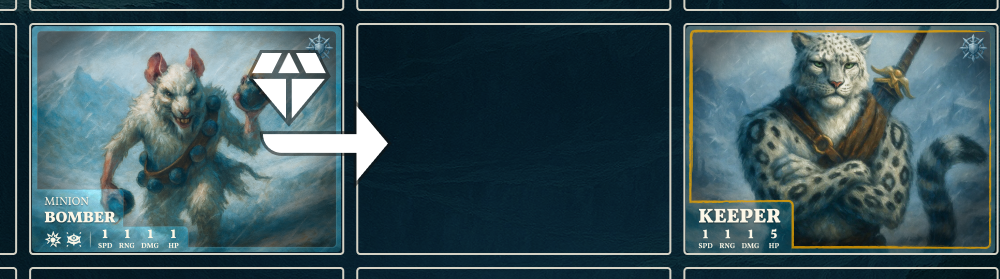
If another friendly Warrior moves over Loot, that Warrior carries it instead of storing it. A Warrior carrying Loot may use an action to pass it to an adjacent friendly Warrior. If the receiving Warrior is your Keeper, the Loot is added to stored Strange Matter immediately.
Loot Values
A Minion leaves behind 2 Strange Matter. A Guardian leaves behind 10. A Keeper leaves behind 5 plus all stored Strange Matter.
Abilities
Copy linkAbilities are special actions or rule changes that affect Warriors, Keeper Ability Cards, or the battlefield itself.
Ability Categories
Minion Abilities
Abilities printed on Minion Warrior cards. Some require an action to use; others are always active.
Keeper Ultimate Abilities
Powerful once-per-game Keeper Abilities selected during setup. Each costs 1 action to use.
Keeper Ability Cards
A deck of 70 unique cards that players may purchase during the game for 5 Strange Matter unless another rule changes the cost.
Keeper Ability Card Types
- Passive: Always active after purchase and remains in the Ability Row.
- Active: Costs an action to use and remains in the Ability Row.
- Event: Resolves when purchased and remains in the Ability Row unless the card says otherwise.
- CC: Costs 1 action to activate if available, then moves to the Cooldown Field and cools down.
Card Cooldown
A 1cc, 2cc, or 3cc card requires that many separate CC cards placed above it in the Cooldown Field before it can return to the Ability Row. Its own placement does not count toward its own cooldown. Returning a cooled-down card to the Ability Row does not cost an action.
Duplicate and Timed Effects
Duplicate active effects from the same CC Ability do not stack. Reactivating a CC Ability while its prior effect is still active does not create a second copy of that ongoing effect. If an effect lasts until “the beginning of the user’s next turn,” it ends immediately when that player’s next turn begins, even if it was used during a Response on the opponent’s turn.
Card text can create exceptions. If a card creates a special situation that changes a core rule, follow that card’s written effect for that situation.
Keeper Abilities
Copy linkKeeper Ability Cards are purchased during the match and are limited by the 7-slot Ability Row.
Ability Row
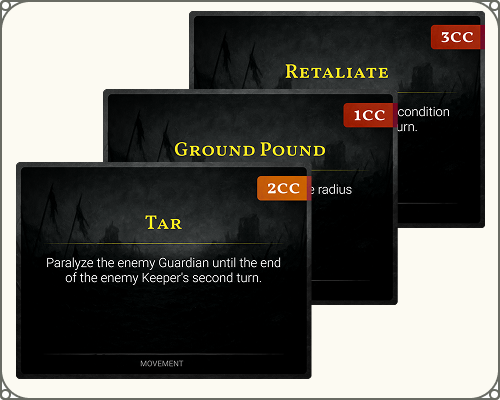
Each player has an Ability Row with 7 slots. This is the maximum number of Keeper Ability Cards a player may own as active, available, or purchased cards during a match. A card in the Cooldown Field still counts as one of that player’s purchased Keeper Ability Cards. Moving a CC card into the Cooldown Field does not free an Ability Row slot.
Purchasing and Replacement
If the Ability Row has fewer than 7 cards, a newly purchased Keeper Ability Card is added to an empty slot unless that card’s rules say it resolves differently. If the Ability Row is full, the player cannot simply add another card. The player is either prevented from purchasing it or must replace an existing Keeper Ability Card only if the selected mode or purchase rule allows replacement.
In Quickplay, Private, Sandbox, or Practice, replacement behavior depends on selected match settings. If the match settings do not allow replacement, a player with a full Ability Row cannot purchase another Keeper Ability Card.
Passive and Event Cards
Passive cards stay in the Ability Row after purchase unless the card text says otherwise. Event cards resolve their purchase effect immediately and then remain in the Ability Row as purchased cards unless the card text says otherwise. Completed one-time effects are not undone if the card is later replaced, disabled, or removed unless a rule specifically says otherwise.
CC Cards and the Cooldown Field
A CC card begins in the Ability Row after purchase. While available, it may be activated by spending 1 action unless another rule prevents activation. When activated, resolve its effect, then place that card at the top of the Cooldown Field. A card in the Cooldown Field is not available for use unless a rule specifically allows it.
Veto, Tax, and Subdued
A player may not activate a CC card if another effect prevents it, such as Subdued, Veto, or Tax when the required Tax payment cannot be made. A Vetoed card will remain in the Ability Row after being Vetoed, but it cannot be used.
Non-Playable Pieces
Copy linkNon-Playable Pieces are cards or objects that cannot move, attack, or be moved once placed. They have battlefield functions rather than acting as Warriors.
LifeForce
Has 15 Health and cannot move. When a LifeForce is destroyed, that player loses unless simultaneous destruction rules apply.
Walls
Have 1 Health, occupy spaces, block normal movement, and may be occupied only by Warriors with Scale.
Markers
Represent hidden Warriors, hidden Bombs, or empty spaces. Hidden Markers are treated as unoccupied.
Bombs
Hidden threats that explode when walked upon or attacked and inflict 3 Damage in a 1-space radius.
Portals
Occupied but traversable spaces. Warriors enter and exit according to Portal direction rules. Warriors cannot attack through Portals.
Void
Occupied but traversable. Destroys any Warrior that enters it. Void is not Damage and is not an Attack.
Strange Matter
The currency used to buy Keeper Ability Cards, Walls, Minions, and Guardian unchaining. It does not occupy a space.
Loot
Strange Matter dropped when a Warrior dies. Loot does not occupy a space.
LifeForce Endgame Rules
If both LifeForces are destroyed at the same time, both LifeForces are removed, both Guardians are immediately Unchained, and the game continues until one Keeper is destroyed. The first player whose Keeper is destroyed loses. If both LifeForces and both Keepers are destroyed at the same time, the active player wins.
Markers and Hidden Objects
Markers may be revealed when a Warrior attempts to occupy their space, when attacked, when exposed by Vision, or when another reveal effect applies. Once a hidden Bomb or Warrior is revealed, all other Marker cards representing empty spaces for that hidden object are removed.
Void and Portal Reminder
Portals and Void are occupied spaces, but they are traversable under their own rules. Void destroys Warriors without dealing Damage. Portal movement is blocked if the required exit space is not legal.
Bombs
Copy linkBombs are hidden Non-Playable Pieces. Bomb explosions inflict Damage, not Attack Damage.
Bomb Limit
Each player may have up to 3 bombs planted at one time. That means no more than 6 bombs can be on the battlefield at one time.
Setting a Bomb
Bombs are placed using Minefield. Minefield places a hidden Bomb on an unoccupied space within a 1-space radius of the Warrior using the Ability, with Marker cards placed in possible spaces to hide the Bomb’s location. A player cannot stack their own bombs on top of each other.
Stacked Enemy Bombs
One player may unknowingly plant a hidden Bomb on top of the other player’s hidden Bomb because Markers are assumed to be empty spaces until proven otherwise. If hidden bombs from opposing players are stacked and later revealed, all stacked bombs immediately explode.
Exploding Bombs
When a Bomb is walked upon or attacked, it explodes and inflicts 3 Damage in a 1-space radius. If another Bomb is within the explosion radius, that Bomb may also trigger, creating a chain reaction.
Response rule: Bomb damage never grants Response Actions to surviving Warriors.
Markers
Copy linkMarkers represent hidden Warriors, hidden Bombs, or empty spaces. While hidden, they are treated as unoccupied spaces.
Revealing Markers
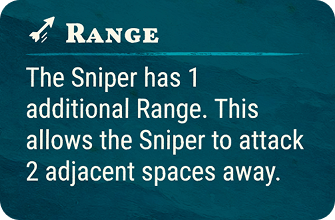
A Marker may be revealed when a Warrior attempts to occupy its space, when the Marker is attacked, when it is exposed by Vision, or when another reveal effect applies. Once a hidden Bomb or hidden Warrior is revealed, all extra Markers that represented possible empty spaces for that hidden object are removed.
Revealing Stacked Markers
- If Vision reveals one Bomb stacked only with empty-space Markers, the Bomb is revealed but does not explode.
- If a Marker is attacked or a Warrior attempts to occupy the space, and one of the Markers is a Bomb, the Bomb explodes immediately.
- If stacked Markers include a Bomb and at least one other Bomb or Warrior, all Bombs in that space explode immediately when revealed.
Multiple Warriors Revealed in One Space
If two or more stacked Markers are revealed to be Warriors, only one Warrior may remain in that space. Resolve the overlap until only one Warrior remains. The top Warrior is moved first to a legal adjacent space of that player’s choice. If no legal adjacent space is available for that top Warrior, that Warrior is destroyed.
Attempting to Occupy a Hidden Warrior’s Space
If a Warrior attempts to occupy a space containing a hidden Warrior Marker, reveal that Marker before completing the movement, Teleport, Deliver, Placement, Summon, or other attempted occupation effect. If the hidden Warrior makes the destination illegal, the attempted movement or placement fails, the acting Warrior remains in its original space, and the action or cost is still spent.
Stealth-Reveal Responses
If the revealed hidden Warrior is stealthed, and the acting Warrior is an enemy Warrior attempting to occupy that hidden Warrior’s space during the opposing player’s turn, the revealed Warrior receives a Response if it survives. This is a Stealth-Reveal Response, not an Attack.
Reveal Effects That Do Not Grant Responses
Vision, battlefield events, friendly Warriors, and non-Attack reveal effects do not grant Responses by themselves. If an enemy attacks a Marker that reveals a stealthed Warrior, the Attack resolves against that Warrior; if it survives, it receives a normal Attack Response, not a Stealth-Reveal Response.
Wall Effects
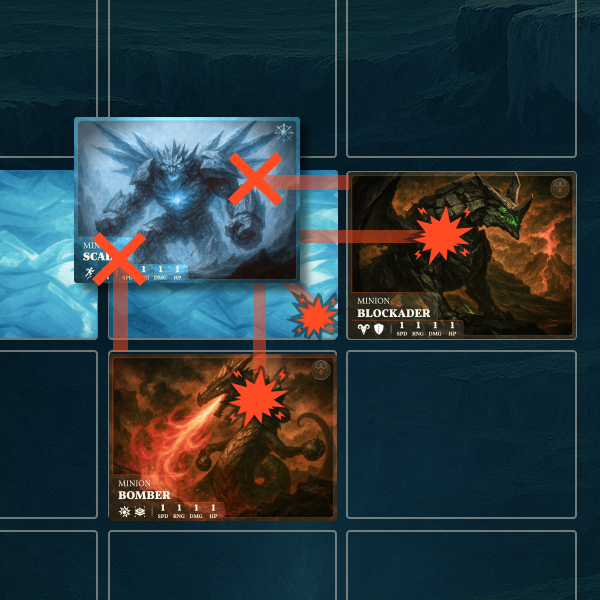
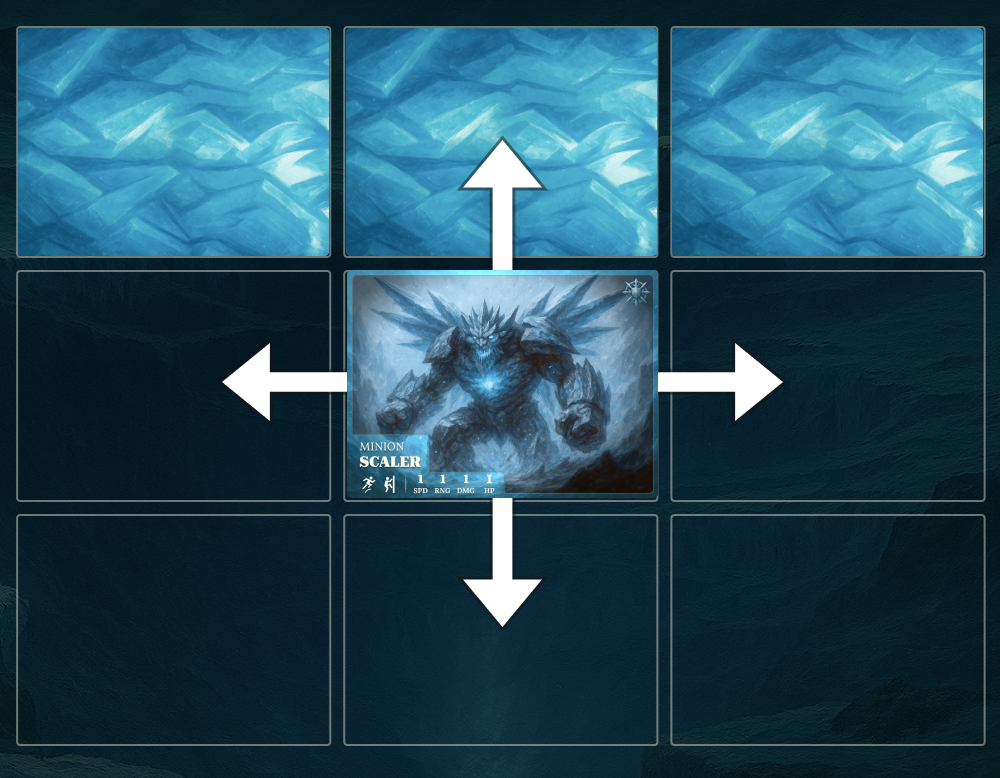
Copy linkWhen a Wall is destroyed, its Wall Effect triggers immediately. Resolve the Wall destruction and Wall Effect fully before any new action, including Responses.
Wall Effect Damage and Movement
If a Wall Effect deals Damage, that Damage is Damage. Damage is not an Attack and does not grant Responses. If a Wall Effect attempts to move a Warrior and that Warrior cannot be moved into a legal space, that Warrior remains in place and receives any Damage caused by the failed movement.
Warriors Standing on Walls
A Warrior standing on top of a Wall is not automatically damaged or otherwise affected just because it is above that Wall. If a Wall Effect damages spaces around the Wall, only the spaces actually affected by that Wall Effect receive that Damage.
Destroying the Wall Beneath a Warrior
If the Wall underneath a Warrior is destroyed, that Warrior falls according to normal Wall rules. The falling Warrior does not take fall damage. If an enemy Warrior destroyed the Wall underneath that Warrior, the falling Warrior receives a Wall-Fall Response after the Wall destruction, Wall Effect, and fall are fully resolved.
Scale and Destroyed Walls
If the Warrior standing on the destroyed Wall has Scale, that Warrior falls unharmed and is unaffected by the Wall’s effect. If an enemy Warrior destroyed the Wall underneath it and the Warrior survives, it receives a Wall-Fall Response.
Warriors That Cannot Be Used
If a Wall Effect says that the Warrior who destroyed the Wall cannot be used for the remainder of the turn, that Warrior cannot take any more actions that turn. If that Warrior is a Keeper, the player’s turn immediately ends because the Keeper represents the player.
Warriors on Walls
Copy linkA Wall is an occupied solid space. A Warrior may occupy a Wall only if it has Scale or another rule specifically allows it.
Occupying a Wall
Moving onto a Wall does not require extra Speed. A Wall counts as a single space. A Warrior without Scale cannot move onto a Wall and cannot be placed on a Wall unless another rule specifically allows it.
Standing on Walls
A Warrior on a Wall is treated as standing on top of that Wall. The Wall and the Warrior are both treated as occupying that location for movement, targeting, and board-state rules.
Attacking From a Wall
A Warrior standing on top of a Wall may attack normally. Being on a Wall does not prevent that Warrior from attacking unless another rule or effect prevents the attack.
Attacking a Warrior on a Wall
If the attacking Warrior is not on a Wall, attacking a Warrior on top of a Wall requires 1 additional Range. A same-level adjacent target requires 1 Range. A target on top of a Wall requires 2 Range.
Attacking Over or Through a Wall
A target behind one empty Wall requires 2 Range. A target behind a Wall with a Warrior standing on it requires 3 Range because both the Wall and the Warrior on it are counted.
Wall Destruction Under a Warrior
If the Wall beneath a Warrior is destroyed, that Warrior falls and does not take fall damage. If an enemy Warrior destroyed the Wall, the falling Warrior gains a Response Action after Wall destruction, Wall Effect, and fall are fully resolved.
Occupied Spaces / Unoccupied Spaces
Copy linkOccupied and unoccupied spaces determine how movement, placement, respawn, summon, and wall-building work.
General Rule
Warriors can normally move only into unoccupied spaces and cannot move through occupied spaces unless an Ability or special rule says otherwise. If a Warrior is pushed or moved into a space it cannot legally occupy, it receives 1 Damage.
Unoccupied Spaces
Unoccupied spaces include empty spaces, Bombs, Strange Matter, Loot, and hidden Markers. These spaces can normally be moved onto or used for placement unless another rule prevents it. Bombs, Strange Matter, and Loot do not make a space occupied.
Occupied Spaces
Occupied spaces can be traversable or non-traversable, and obstacles or non-obstacles. A traversable obstacle is a Wall for a Warrior with Scale. Traversable non-obstacles include Portals and Void. Non-traversable obstacles include other Warriors, Walls for Warriors without Scale, and LifeForces.
Walls
Walls are occupied spaces. A Wall cannot be placed in an occupied space. A Warrior with Scale may move onto, be respawned onto, or be summoned onto a Wall. A Warrior without Scale may not.
Portals and Void
Portals and Void are traversable occupied spaces. They may be entered through movement if their rules allow it, but they are still occupied spaces. Portals and Void do not count as obstacle spaces for Leapfrog.
Respawn, Summon, and Traversable Spaces
A Keeper or Minion may be respawned, summoned, revived, resurrected, or purchased onto an unoccupied space or onto a traversable occupied space that the Warrior is legally allowed to occupy. If a Warrior is respawned or summoned onto a Portal, that Warrior automatically moves up through the Portal from the perspective of the player who is doing the spawning or summoning.
Instant Death Situations for a Warrior
Copy linkSome effects destroy Warriors regardless of current Health.
Destroy Effects
Any rule or card effect that uses the word Destroy is a health-independent kill. This includes effects such as Forfeit, Reduction, or Void.
Void
Void destroys any Warrior that moves, is moved, teleports, is Delivered, is placed, or otherwise enters the Void’s space. Void is not Damage and is not an Attack.
Chained Guardians and Vetoed Portals
If a Chained Guardian is outside its allowed range because of a Portal and that Portal is Vetoed or removed, the Guardian is immediately destroyed.
Markers and Overlap
If multiple revealed Warriors occupy the same space and the top Warrior cannot legally be moved to any valid adjacent space, that top Warrior is destroyed.
Failed Keeper Respawn
If a Keeper is defeated and cannot legally respawn, that respawn fails. When a Keeper’s respawn fails, its LifeForce is reduced to 0 and that player immediately loses the game.
Ways to Play
Copy linkThese are the current public player-facing ways to play Keepers Dissension.
Quickplay
Standard non-ranked matchmaking for regular matches. Quickplay may be played in Calculated or Chaotic format depending on selected settings.
Private
Passcode-protected rooms for custom matches between specific players. Private mode may allow custom settings such as setup style, timers, and first-player rules.
Sandbox
Unrestricted testing and experimentation mode. Sandbox is for testing, development review, unusual positions, or unrestricted play.
Practice
Play against a bot to learn the game or test ideas. Practice uses standard match rules unless a specific Practice setting changes them.
Public site note: this rulebook intentionally includes only modes available or intended for player-facing public rules at this stage.
Terms
Copy linkCore terms used throughout the rules.
Ability Attack — An Attack caused by an Ability that explicitly says “Attack” or instructs the player to make an Attack.
Ability Row — The 7 slots where Ability Cards are placed after purchase. This row defines the maximum number of Keeper Ability Cards a player may have active or available.
Activate — To use a Card Cooldown Ability. After activation, the card is placed in the Cooldown Field.
Action — The capability to Attack, Move, use Strange Matter, purchase items, use an Ability, or perform another legal game function.
Assembly — The pool of Minions not currently on the Battlefield.
Attack — The standard Attack action, including Melee Attacks and Ranged Attacks, or an Ability effect that explicitly says “Attack” or instructs the player to make an Attack. Damage, Health loss, Destroy effects, forced movement, Wall effects, inflicted Damage, and other hostile effects are not Attacks just because they harm or affect a Warrior.
Attribute — A value used by Actions or effects. The main Attributes are Strength, Range, Health, and Speed.
Damage — Damage caused by the battlefield, traps, bombs, explosions, collisions, Wall effects, failed forced movement, inflicted Damage, or other non-Attack events. Damage is not an Attack and does not grant Responses.
Base — The initial value of an Attribute before modifiers are applied.
Board — The 7x7 grid playing area.
Card Cooldown / CC — The cooldown system used by certain Keeper Ability Cards. CC cards must be activated, placed in the Cooldown Field, and cooled down before they can be used again.
Cooldown Field — The area where Card Cooldown Ability Cards are placed after use.
Damage — A reduction of a Warrior’s, LifeForce’s, or Wall’s Health.
Death — A Warrior dies when its Health reaches 0. Loot is dropped according to the Loot Table.
Destroy — To remove a Warrior, Wall, LifeForce, or other object through a destruction effect rather than by dealing Damage. Destroy effects are not Attacks.
Economy — The pool of Strange Matter available to be collected or returned during gameplay.
Forced Movement — A Warrior being pushed, displaced, rammed, teleported, delivered, or otherwise repositioned without using that Warrior’s own movement action.
Graveyard — The pool of previously summoned Minions that are no longer on the Battlefield.
Heal — To increase a Warrior’s current Health up to its maximum Health.
Health — The amount of Damage a Warrior, LifeForce, or Wall can receive before being destroyed.
Inflict — To cause Damage without making an Attack. If a card says to inflict Damage, that Damage is Damage, not Attack Damage. Inflicted Damage does not grant a Response.
Leap — To move through or over a space and end in a space beyond it.
Loot — Strange Matter dropped when a Warrior dies.
Melee Attack — An Attack caused when a Warrior attacks an adjacent target in a direction it is allowed to attack.
Move — Voluntary movement that uses a movement action or an effect that says the unit moves.
Obstacle — A solid object that blocks normal movement and may be leapt over by Leapfrog. Walls and Warriors are obstacles. Void and Portals are not obstacles for Leapfrog.
Passive — A Keeper Ability Card that does not use Card Cooldown.
Placement — A unit being put directly into a legal space without moving through intervening spaces. Deliver, Teleport, respawn, summon, and marker-overlap resolution are forms of Placement.
Radius — Board spaces in any direction from a chosen space.
Range — Board spaces in cardinal directions. Range is also the Attribute that determines how far a Warrior can attack.
Ranged Attack — An Attack caused when a Warrior attacks a target within Range beyond melee distance.
Reserves — The collection of Strange Matter under a player’s control.
Resurrect — To summon a Minion from the Graveyard rather than from the Assembly.
Respawn — The process of returning a Keeper to the Battlefield after it is destroyed, if its LifeForce survives. The Keeper is placed according to Keeper respawn priority.
Response — An action granted to a Warrior during the opposing player’s turn after one of three Response triggers: the Warrior survives an Attack from an enemy Warrior, the Warrior falls because an enemy Warrior destroyed the Wall underneath it, or the Warrior is revealed from Stealth because an enemy Warrior attempts to occupy its space. A player cannot receive or take a Response Action during their own turn.
Reveal — To uncover a hidden Marker and show what it represents.
Speed — The number of spaces a Warrior may move through when taking a Move action.
Stealth-Reveal Response — A Response granted during the opposing player’s turn when an enemy Warrior attempts to occupy the space of a hidden stealthed Warrior, causing that Warrior to be revealed. This is not an Attack.
Strange Matter — A mysterious material used as currency and to fuel purchases or abilities.
Strength — The Attribute that defines how much Damage is done by an Attack.
Summon — To place a Minion from the Assembly or Graveyard onto a legal space allowed by the effect causing the summon.
Teleport — To instantly move between legal spaces without moving through the spaces in between.
Unavoidable — A damage or Health-loss modifier meaning the damage or Health loss cannot be prevented, reduced, redirected, or replaced. Unavoidable does not decide whether a Response happens; the event must still be one of the three valid Response triggers and must happen during the opposing player’s turn.
Wall-Fall Response — A Response granted during the opposing player’s turn when an enemy Warrior destroys a Wall underneath a Warrior, causing that Warrior to fall. This is not an Attack.
Keeper Ability Card Reference
Copy linkSearch or browse the current public Keeper Ability Card reference. Card text here is aligned to the latest rules source of truth, with advanced rulings expanded for edge-case cards.
01🟥
Affliction
Event
Cut the enemy Guardian’s current Health in half. If odd, round up. This is unavoidable Health loss, not an Attack.
02🟩
Ambush
1cc
The next Attack by one of your Warriors does not grant a Response. If Ambush is reactivated before its current effect has been used, no additional Ambush effect is created. The new activation may still affect cooldown positioning normally.
03🟩
Armor
Passive
Your Keeper ignores 1 Damage per turn. Armor prevents Damage. Armor does not prevent direct Health changes that are not Damage.
04⬜
Bounty Hunter
Passive
Loot dropped by enemy Warriors you kill is increased by 2.
05🟦
Call to Arms
Passive
When the enemy Guardian is Unchained, your Minions gain +1 Strength.
06🟪
Casters
Event
Activate an available CC Ability. The enemy Keeper must activate a CC Ability if available. You may then activate a second CC Ability. Your turn then ends immediately.
07🟥
Collapse
Passive
When your Walls are destroyed by enemy Warriors, those Walls inflict 1 Damage in addition to their Wall Effect.
08🟩
Compromise
2cc
Heal all LifeForces and Warriors by 3.
09🟦
Comrade
Passive
When your Keeper respawns, summon a Minion.
10🟥
Critical Hit
2cc
Attack with 3 Damage and 1 Range.
11🟩
Dash
Passive
Your Keeper gains +1 Speed.
12🟩
Deliver
Active
Your Keeper may spend 1 action to place Deliver on any Warrior within 1 space. The next time that Warrior would receive Damage before the beginning of your next turn, it teleports to a legal space on its LifeForce row instead. If Deliver is triggered by an enemy Attack, Deliver acts as that Warrior’s Response and no additional Response is granted.
Advanced ruling
Deliver is mandatory once triggered. If it is triggered by an enemy Attack, Deliver acts as that Warrior’s Response and no extra Response is granted. If triggered by Damage, it teleports the Warrior but does not grant a Response.
13⬜
Deplete
2cc
Force the enemy Keeper to return 2 Strange Matter to the Economy.
14🟥
Explode
Passive
When your Keeper is killed, your Keeper explodes and inflicts 3 Damage in a 1-space radius. Explode is not an Attack and does not grant Responses.
15⬜
Famine
3cc
Neither Keeper can take Strange Matter from the Economy or spend Strange Matter until the end of your next turn.
16⬛
Forfeit
1cc
Destroy a friendly Minion. Add 4 Strange Matter to your reserves.
17🟥
Ground Pound
1cc
Attack every space within a 1-space radius around the Keeper simultaneously. Ground Pound is an Attack.
18🟧
Grounded
3cc
The next Warrior attacked by your Keeper takes no damage and cannot move until it receives Damage from a source other than itself. A Grounded Warrior may still be moved by effects such as Ram, Deliver, Teleport, or Wall effects.
Advanced ruling
A Grounded Attack is still an Attack. If the attacked Warrior survives an enemy Attack during the opposing player’s turn, it receives a Response unless another effect prevents that Response. Deliver does not trigger from a Grounded Attack because the Attack deals no Damage.
19🟩
Health Match
1cc
Set the enemy Keeper’s current Health to match your Keeper’s current Health.
20🟥
Health Slash
2cc
Cut the enemy Keeper’s current Health in half. If odd, round up. Health Slash changes Health directly. It does not deal Damage, so Armor does not prevent it. Health Slash is not an Attack.
Advanced ruling
Health Slash changes Health directly. It does not deal Damage, so Armor does not prevent it and Deliver does not trigger from it unless the effect is specifically worded as an Attack that deals Damage.
21🟥
High Stakes
3cc
The next Attack by any Warrior or Ability deals 8 Damage. This ends your turn.
22🟧
Hinder
Passive
Enemy Warriors within 1 space of your Keeper cannot move through voluntary movement. Hinder does not prevent forced movement.
23🟥
Hunter
Passive
Your Keeper’s Damage is doubled when attacking the enemy Guardian.
24🟪
Hyperdrive
2cc
Activate up to two of your CC Ability Cards. Place Hyperdrive on top of the activated cards in the Cooldown Field.
25🟩
Immunity
1cc
Your Warriors are not affected by Wall effects for the remainder of this turn.
26🟩
Invincible
3cc
Your Keeper cannot receive Damage until the end of your next turn.
27🟧
Leapfrog
Active
Your Keeper may leap over one obstacle directly in its path and land on the legal space immediately on the other side of that obstacle. Limited to 1 Speed.
Advanced ruling
Leapfrog can leap over one obstacle directly in its path. Walls, Warriors, and LifeForces are obstacles. Portals, Void, Loot, Strange Matter, Bombs, and Markers are not obstacles for Leapfrog unless a rule says otherwise.
28🟨
Minefield
1cc
Place a hidden Bomb in a 1-space radius of the Keeper, with Marker cards placed in possible spaces to hide the Bomb’s location. When the Bomb is attacked or moved upon, it explodes and inflicts 3 Damage within a 1-space radius. Minefield is not an Attack and does not grant Responses. Each player may have only 3 Bombs on the board at one time.
29🟥
Minionized
2cc
Until the end of your third turn, both Keepers’ current Health and maximum Health are set to 1.
30🟧
Mirage
3cc
Switch your Keeper’s position with any of your Minions or your Unchained Guardian.
31🟥
Penalty
2cc
Inflict 1 Damage to the enemy Keeper for every space they move on their next turn. Penalty is not an Attack and does not grant Responses.
Advanced ruling
Delivered movement is not counted as movement for Penalty. Penalty is Damage, not an Attack.
32🟩
Persevere
Passive
When below 3 Health, your Keeper gains +1 Strength.
33🟨
Portal
Event
Place two Portals on any two unoccupied spaces and end your turn. The direction a Warrior enters a Portal determines its exit position from the connected Portal. Portals are occupied spaces that Warriors may enter through Portal movement rules. Warriors cannot deal Damage through Portals.
Advanced ruling
A Warrior cannot use a Portal if the required adjacent exit space is blocked or illegal. If a Warrior is forced through a Portal anyway and cannot legally exit, resolve the failed movement damage. If a Chained Guardian is outside its allowed range when a Portal is Vetoed, that Guardian is destroyed.
34🟧
Ram
Passive
Your Keeper may push other Warriors 1 space in the direction of the Keeper’s movement, taking their place. If the pushed Warrior cannot be moved into a legal space, neither Warrior moves and the pushed Warrior receives 1 Damage. This Damage is not an Attack and does not grant a Response.
35🟩
Range
Passive
Your Keeper gains +1 base Range.
36🟨
Rebuild
1cc
Place the original Walls in every unoccupied space in the Wall row. If a space in the Wall row is occupied, no Wall is placed there.
37⬛
Reduction
3cc
Destroy a friendly Warrior. The enemy Keeper destroys one of their Warriors. The dropped Loot is placed in the respective Keeper’s reserves.
38🟩
Refresh
2cc
Heal your Keeper by 3, up to its maximum Health.
39🟩
Regeneration
2cc
Heal your Keeper by 1. At the beginning of your next turn, heal your Keeper by 1 again.
40🟧
Repel
Passive
When your Keeper attacks a Warrior, that Warrior is pushed 1 space in the direction of the Keeper’s attack. If that Warrior cannot move into a legal space, it receives 1 additional Damage. Repel does not apply additional effects when the attacking Warrior and the affected Warrior are the same Warrior.
Advanced ruling
Repel does not apply additional effects when the attacking Warrior and affected Warrior are the same Warrior.
41🟪
Reset
2cc
Place one of your Ability Cards from the Cooldown Field back into your Ability Row.
42⬜
Resourceful
2cc
Reduce your Strange Matter costs by 2 until the beginning of your next turn.
43🟩
Restore
3cc
Heal your Keeper to maximum Health.
44🟥
Retaliate
3cc
Until the end of your third turn, your Keeper reflects any Damage it receives from enemy attackers regardless of Range. Retaliate does not reflect Damage back onto a Warrior that caused Damage to itself.
Advanced ruling
Retaliate does not reflect Damage back onto a Warrior that already caused that same Damage to itself.
45⬜
Return
2cc
Transfer all Strange Matter from your reserves into the Economy. The enemy Keeper must also transfer all Strange Matter from their reserves into the Economy.
46🟦
Revive
3cc
Resurrect up to 3 Minions.
47🟥
Risk
2cc
Reduce the enemy LifeForce’s current Health by 5. Reduce your LifeForce’s current Health by 10. This Health loss is Unavoidable and is not an Attack. If both LifeForces are destroyed at the same time, both Guardians are Unchained and the first Keeper destroyed loses.
Advanced ruling
Risk changes LifeForce Health directly. Armor, Invincible, Truce, Deliver, and other Damage-prevention effects do not prevent it unless they specifically prevent direct Health loss. During simultaneous LifeForce destruction, destroyed Keepers do not respawn because no surviving LifeForce remains to support respawn.
48🟧
Scale
Passive
Your Keeper can move onto or off of Walls. If a Wall underneath your Keeper is destroyed by an enemy Warrior, your Keeper falls unharmed, is unaffected by the Wall’s effect, and receives a Response if it survives. This is a Wall-Fall Response, not an Attack.
49🟥
Shockwave
2cc
For every Red Keeper Ability Card you have, inflict 1 Damage to every space on the battlefield. This affects Warriors, LifeForces, Walls, Bombs, Markers, and any other battlefield object that can receive or be affected by Damage. Shockwave is not an Attack and does not grant Responses. All Shockwave Damage is applied simultaneously.
Advanced ruling
Shockwave Damage is applied simultaneously to every affected space. It can damage Markers, Bombs, Walls, Warriors, LifeForces, and other damageable objects. Shockwave may trigger Deliver because it causes Damage, but it does not create Responses because it is Damage, not an Attack.
50🟧
Slowdown
2cc
Until the end of your third turn, all Warriors are restricted to 1 Speed.
51🟥
Snipe
1cc
Attack for 1 Damage up to 3 Range. Snipe is an Attack.
52🟧
Sprint
3cc
Grant a Warrior of your choice +3 Speed for 1 action during this turn.
53🟩
Steadfast
2cc
Until your Keeper moves or is moved, enemy Minion Attacks cannot damage your Keeper. These Attack attempts still grant a Response.
54🟧
Stealth
Active
Your Keeper may spend 1 action to enter Stealth. Your Keeper masks its movement by placing Markers in available movement spaces, including its current location. The Keeper receives a Response only if an enemy Warrior attempts to occupy the Keeper’s hidden space and the Keeper survives after required placement, movement reversal, overlap, or repositioning. This is a Stealth-Reveal Response, not an Attack.
Advanced ruling
If an enemy attacks a Marker that reveals your stealthed Keeper, the Attack resolves against the Keeper and can grant a normal Attack Response if the Keeper survives. If an enemy tries to occupy the hidden space, the Response is a Stealth-Reveal Response instead.
55🟧
Strafe
Passive
Your Keeper can move and attack diagonally.
56🟩
Strength
Passive
Your Keeper gains +1 base Strength.
57🟧
Stun
Active
Your Keeper may spend 1 action to immobilize an enemy Warrior within 2 Range until the beginning of your next turn. If used during a Response on the opponent’s turn, it still ends at the beginning of your next turn.
58🟪
Subdued
2cc
Neither Keeper can activate CC Abilities until a Keeper dies.
59🟧
Tar
2cc
Immobilize the enemy Guardian until the end of the enemy Keeper’s second turn.
60🟪
Tax
Event
Choose one of the enemy Keeper’s CC Ability Cards. The enemy Keeper must pay you 1 Strange Matter to activate that Ability. If the taxed player cannot pay, that activation cannot occur.
Advanced ruling
The Tax payment is an additional activation cost. If the taxed player cannot pay 1 Strange Matter when attempting to activate the chosen CC card, the activation cannot occur and Tax remains attached to that card.
61🟧
Teleport
1cc
Teleport your Keeper to any legal space adjacent to your LifeForce. Teleport places the Keeper directly onto the destination space without moving through intervening spaces.
Advanced ruling
Teleport may target hidden Markers because hidden Markers are treated as unoccupied until revealed. If the Marker is revealed to be a hidden Warrior, the Teleport destination becomes illegal, the Teleport fails, and the action and Ability use are still spent.
62🟩
Toughen
Event
Your Keeper’s maximum Health is set to 7. Heal your Keeper to maximum Health.
63🟩
Truce
2cc
No Damage can be dealt or received until the end of your third turn.
64🟪
Veto
Event
Choose one of the enemy Keeper’s Ability Cards from their Ability Row, Cooldown Field, or private hand. If choosing from their private hand, choose blindly without revealing the card. The chosen Ability cannot be used for the rest of the game. Portal and Void objects created by a Vetoed card are removed.
Advanced ruling
A Vetoed card cannot be activated, invoked, triggered, reused, returned for use, or purchased for effect for the rest of the game. A Vetoed card in the Cooldown Field may still count toward cooldown placement but cannot be used again.
65🟩
Vision
Passive
Your Keeper reveals all hidden enemy Markers within a 1-space radius. Vision is not an Attack and does not grant Responses.
66🟨
Void
Event
Place a Void on any unoccupied space. A Void destroys any Warrior that moves or is moved onto it. Void is an occupied space, but it does not count as an obstacle for Leapfrog. Void is not Damage and is not an Attack.
Advanced ruling
Void destroys Warriors without dealing Damage and without making an Attack. A Warrior destroyed by Void does not receive a Response. If a Warrior carrying Loot or Strange Matter enters Void, the carried Loot or Strange Matter is destroyed and is not dropped or added to reserves.
67🟥
Vulnerable
Passive
The enemy Keeper respawns with only half of its maximum Health. If odd, round up.
68🟨
Wall Builder
2cc
Place a Wall in any unoccupied space.
69🟦
Weaken
Passive
The enemy Guardian’s Strength is reduced by 1.
70🟧
Wounded Runner
Passive
When at 1 Health, your Keeper’s base Speed is 3.
Warrior Quick Reference
Copy linkUse this quick reference during your first games. Full rules for these Warriors appear in the sections above.
Keeper
Leader of the army; base 1 Speed, 1 Range, 1 Strength, 5 Health; tied to the LifeForce and chosen Ultimate.
Guardian
Protector of the LifeForce; Chained Guardian has 10 Health and limited movement; Unchained Guardian becomes a major threat.
Mage
Uses Stun and Deliver for control, protection, and repositioning.
Blockader
Uses Armor and Ram to hold space and force collisions.
Sniper
Uses Range and Stealth to threaten from distance and hide its true location.
Bomber
Uses Minefield and Explode to pressure without granting Responses.
Scout
Uses Vision and Strafe to reveal Markers and move/attack diagonally.
Ogre
Uses Strength and Ground Pound to pressure clustered enemies.
Scaler
Uses Leapfrog and Scale to cross obstacles and occupy Walls.
Battle Tactics
Copy linkBattle Tactics is the table-side companion for situational play: strategy plans, unusual rulings, and advanced timing reminders. The Rules tab teaches the game; this tab helps players make better decisions inside it.
The Rules tab is the official start-to-finish learning path.
Look here when you want strategy, traps, timing reminders, or odd-situation guidance.
The search bar filters the active mode, including card names, Responses, Bombs, Walls, Portal, Void, and more.
Strategies Players May Consider Utilizing
Copy linkThese are strategic patterns players can explore after they understand the core rules.
Guardian Rush Economy Plan
Players can choose to spend early turns heavily acquiring Strange Matter with the specific goal of unchaining their Guardian as quickly as possible. A fast unchained Guardian can swing control of the battlefield through superior threat, durability, and pressure, especially if the opponent has not built enough board presence yet.
Keeper Response Exploitation
Players can bait attacks onto their Keeper when the resulting Response Action would be more valuable than the damage taken. Because a surviving Keeper grants a full player-level Response Action rather than only a personal one, this can be used to reposition another Warrior, buy tempo, or set up a stronger counterturn.
Bombs as Response-Denial Pressure
Since bomb explosions deal Damage and are not Attacks, they do not grant Responses. Therefore, players can use hidden bombs to damage or finish enemies without giving them the usual chance to immediately counterplay. This makes bombs especially valuable for softening or removing dangerous targets safely.
Command Turn Theft
Players can use Command to temporarily turn the enemy Keeper into their own tool. This can allow them to spend the opponent’s available actions, use their legal abilities, attack with their forces from the wrong side of the board, or even waste valuable once-per-game options if timing allows.
Forced Inefficiency Strategy
One of the strongest overall approaches in Keepers Dissension is not necessarily immediate damage, but forcing the opponent to spend actions inefficiently. Walls, Deliver, hidden bombs, elevation, and awkward movement lanes can all turn the game into a tempo war where the player with the cleaner action economy gains the long-term advantage.
Bomb and Wall Remote Detonation
Players can hide bombs with Minefield and then intentionally build or use Walls in ways that help trigger explosions from a safer distance. This allows the player to threaten enemy movement lanes, punish opponents who cluster too tightly, and create situations where the opponent is damaged without gaining the usual benefit of a Response Action. When used well, this strategy turns the battlefield itself into a trap and forces the opponent to respect hidden danger even when no attacker is directly adjacent.
Guardian Rush Economy Plan
Players can choose to spend early turns doing little other than acquiring Strange Matter with the goal of unchaining their Guardian as quickly as possible. A fast unchained Guardian can dramatically swing control of the battlefield through high durability, strong damage output, and broader movement freedom, especially if the opponent has spent their early turns on slower setup plays. This strategy is risky because it can concede early tempo, but if the Guardian comes online before the opponent is prepared, it can quickly become the central force on the board.
Emergency Self-Sacrifice for Economy
Players can intentionally destroy one of their own Minions in a pinch if doing so creates the Strange Matter swing needed for a more important play. This can be worthwhile when sacrificing a low-value or poorly positioned Warrior allows the player to afford a critical Ability Card, build a needed Wall, or activate a stronger turn that would otherwise be delayed. The strength of this strategy lies in recognizing when immediate economy and tempo matter more than preserving every piece on the board.
Self-Deliver Damage Setup
Players can place Deliver on their own Warrior, including their Keeper, and then use that protection aggressively if the situation calls for it. Because Deliver is mandatory once triggered, it can be used as a temporary safety net that allows a Warrior to take a more dangerous position, bait an attack, or trade into a contested area with less fear of immediate loss.
In the right situation, this lets a player force damage or claim space first, knowing that the delivered unit can be repositioned out of danger when the opponent finally strikes. Expert players will usually focus on action efficiency above all else, trying to force the opponent to waste actions on repositioning, escaping pressure, rebuilding formation, or reacting to traps.
In both modes, strong players will likely center their game plan around one of three main paths to victory: direct LifeForce pressure, economy acceleration, or fast Guardian activation. Keeper Responses will be a major high-level tactic, because a surviving Keeper gives a full player-level Response Action that can be turned into strong counterplay or tempo swings.
In Calculated mode, expert players will likely gain their edge through drafted card synergy, cooldown sequencing, and matchup planning, since they can build a more deliberate and repeatable strategy. In Chaos mode, expert players will likely gain their edge through adaptation, shared-hand control, and stronger board fundamentals, since they must make the best use of a less predictable private hand.
Response Timing Playbook
Copy linkResponses are powerful because they happen during the opposing player’s turn, but they only come from defined Response triggers. Do not assume damage creates a Response. A Warrior receives a Response only after surviving an enemy Attack, falling because an enemy Warrior destroyed the Wall beneath it, or being revealed from Stealth because an enemy Warrior attempted to occupy its space. Keeper Responses are especially valuable because the Keeper receives a player-level Response, which can be spent on any one legal player action. This means a Keeper Response may be worth more than a normal Warrior Response.
Attack vs Damage
Copy linkA clean tactical distinction is this: Attacks can grant Responses; Damage usually does not. Bombs, Void, Wall effects, forced movement damage, Shockwave, Explode, collision damage, and direct Health loss are not Attacks just because they hurt something. This makes non-Attack pressure valuable when you want to finish a Warrior without giving the opponent an immediate counteraction.
Wall and High-Ground Tactics
Copy linkWalls are not just blockers. They change Range math, create protected angles, and can trigger Wall Effects when destroyed. Warriors with Scale can occupy Walls and attack normally from them. Ground units need additional Range to attack a Warrior on a Wall or to attack across a Wall. Destroying a Wall under an enemy Warrior can create a Wall-Fall Response, so choose that line only when the tempo trade is worth it.
Stealth, Markers, and Misdirection
Copy linkStealth and Markers are strongest when the opponent must guess whether a space is empty, a Bomb, or a hidden Warrior. Attacking a Marker can reveal and damage a hidden Warrior, but attempting to occupy a stealthed Warrior’s true space can create a Stealth-Reveal Response. Vision counters this by revealing enemy Markers in range without being an Attack.
Bomb Pressure and Response Denial
Copy linkBombs inflict Damage rather than Attack Damage, so they do not grant Responses. This makes Bombs excellent for softening enemies, finishing fragile Warriors, and punishing predictable paths. Because opposing hidden Bombs can stack unknowingly, Marker-heavy spaces can become volatile if revealed by attack or occupation.
Economy and Guardian Timing
Copy linkA player can rush Strange Matter to unchain the Guardian, buy Keeper Ability Cards, rebuild Walls, or purchase Minions. Guardian unchaining is expensive, but it can swing the match if the opponent has neglected board control. Card purchases are cheaper and can create tactical answers sooner. The best economy line depends on whether you need board presence now or a heavier threat later.
Portal and Void Caution
Copy linkPortal and Void are traversable occupied spaces with very different consequences. Portals move Warriors according to entry direction, but blocked exits stop legal Portal movement. Void destroys Warriors that enter it and does not deal Damage. Void can be tactically decisive, but it can also disrupt placement, Wall building, and routes for your own Warriors.
Card Cooldown Tempo
Copy linkCC cards are tempo investments. Activating a CC card gives an effect now but sends the card to the Cooldown Field until enough separate CC cards are placed above it. Hyperdrive, Reset, Casters, Tax, Subdued, and Veto all interact with this timing layer. A player with multiple CC cards should plan not just what to use, but what each activation will cool down.
Endgame Awareness
Copy linkKeepers Dissension has several non-obvious endgame states. If a LifeForce is destroyed, that player normally loses. If both LifeForces are destroyed simultaneously, both are removed and the game can continue until a Keeper is destroyed. If both LifeForces and both Keepers are destroyed simultaneously, the active player wins. A failed Keeper respawn also reduces that LifeForce to 0 and immediately ends the game.
Competitive Preparation
Copy linkUse this checklist before a serious match.
Plan your first turn before the match starts. Know whether you want early board control, early economy, or a fast attack lane.
Do not hand the opponent strong Responses for free. Ask what happens if your attack fails to finish the target.
Every purchase changes tempo. Decide whether this turn is best used for cards, Walls, Minions, or saving for a Guardian unchain.
Your Keeper often carries both positioning value and stored Strange Matter. Avoid careless exposures.
Wall pressure and Bomb placement can decide a game before the final push ever happens.
Strong play often comes from setting up your next turn while disrupting your opponent’s next turn at the same time.